
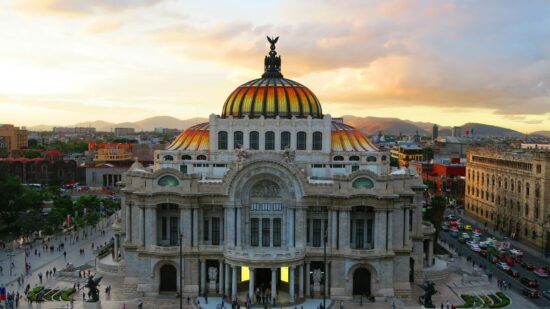
In Mexico, the sporting event carries special significance, as it will be the third time that the World Cup has been held in the same country. Mexico previously hosted the tournaments of 1970 and 1986, the competitions that cemented the legacies of Pelé and Maradona, respectively. It is also the first time that three countries have coordinated to host the championship. In 2002, South Korea and Japan jointly organized the World Cup, while Australia and New Zealand hosted the Women’s World Cup in 2023.
Building on those experiences, and on the lessons to be gained from the Mexico–United States–Canada 2026 tournament, Spain, Portugal, and Morocco will host the World Cup in 2030. In addition, matches will be played in Uruguay, Argentina, and Paraguay. Although the event is fundamentally a sporting competition, its domestic and international political implications cannot be overlooked.
At nearly the same time that the World Cup is being played, the commercial bloc formed by Mexico, the United States, and Canada is negotiating and preparing the next stage of the United States–Mexico–Canada Agreement (“USMCA”). Countries that host the World Cup take advantage of the global spotlight to project modernity, stability, technological capacity, as well as cultural and historical prestige.
This year’s World Cup serves as a vehicle for strengthening regional relations, and its political significance is evident. FIFA, the organization responsible for the tournament, has become much more than a sports governing body. It wields economic and diplomatic influence comparable to that of other international organizations. Many of its decisions have tangible political consequences. As soccer has become the world’s most influential sport, host nations inevitably become the focus of international attention. In the coming days, the eyes of the world will be fixed on the stadiums of the three host countries, partners in trade, economics, and sport. At the same time, though with far less fanfare, the negotiating teams of the three nations will produce a document that will establish the commercial rules governing North America.