
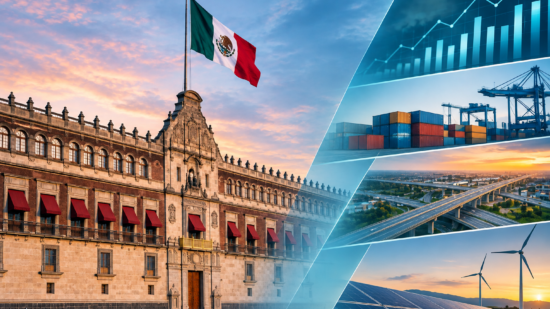
Mexico’s political landscape has reached a critical juncture. The concentration of power, relations between the current government and the opposition, the direction of the economy, and public security are among the key indicators of the country’s political climate.
The ruling Morena party maintains a dominant position in Mexican politics, supported by its nationwide presence and legislative strength. This advantage allows the party to advance its policy agenda and pursue far-reaching institutional reforms. At the same time, it raises important questions about preserving democratic checks and balances, institutional independence, and the separation of powers.
The opposition faces the challenge of rebuilding its credibility and presenting a viable alternative that addresses the concerns of Mexican citizens. Rather than simply criticizing the government’s shortcomings, opposition parties must offer practical proposals, develop new leadership, and establish closer ties with a diverse society whose priorities include public safety, employment, healthcare, education, and economic opportunity.
On the economic front, investment, legal certainty, fiscal discipline, and trade relations with the United States will be decisive factors. Nearshoring presents a significant opportunity for Mexico, provided the country has adequate infrastructure, reliable energy supplies, and a clear regulatory framework. Bilateral cooperation will require a balance between economic pragmatism and the protection of national sovereignty.
Public security remains a major concern. Progress in this area will depend not only on the ability of law enforcement agencies to combat organized crime but also on effective prevention strategies, professional police forces, and stronger prosecutorial institutions and judicial systems.
Mexico’s political climate cannot be measured solely by presidential approval ratings or election results. Public trust, the quality of political debate, respect for the rule of law, and the ability to reach agreements are equally important. Mexico needs a political culture that acknowledges differences without turning them into permanent divisions. The government, opposition parties, civil society, and the private sector have distinct responsibilities, but they share a fundamental interest in building a safer, more prosperous, and more democratic country. Dialogue, accountability, and an objective assessment of results are essential to achieving that goal.